Enterprise payment solutions for stablecoins: What makes a platform enterprise-grade?

Introduction
Every payment provider claims to be "enterprise-grade," but marketing language doesn't keep systems online during peak traffic, satisfy regulators, or ensure operational reliability.
In 2025, stablecoins processed more than $10 trillion in on-chain payments (not including activity related to crypto trading), rivalling the volumes of major payment networks like Visa. With forecasts from Citi and EY pointing to explosive growth in real-world use cases, stablecoins are fast becoming the backbone of digital payments.
As a result, the infrastructure requirements for enterprise payments are evolving fast.
The platforms that scale successfully share five critical capabilities: 99.99% uptime with audited SLAs, global and dual licensing (fiat and digital assets), full-stack infrastructure reducing third-party dependencies, hybrid fiat-stablecoin operations, and proven performance at scale.
This guide provides a practical evaluation framework, specific benchmarks, and the exact questions that reveal genuine enterprise capability.
Key takeaways:
- Ask for proof, not promises: Request audited uptime reports, license information and performance metrics from live enterprise clients
- Proven scale matters: Look for providers processing billions annually with enterprise client references – performance under real-world conditions separates marketing from capability
- Switching drains budgets and resources: Migration takes months and disrupts operations – use this evaluation framework before signing.
What “enterprise-grade” really means in stablecoin payments
Here's what separates an enterprise solution from a mid-market fintech stack:
1. Reliability and operational resilience
When your payment rail goes down during peak traffic, you risk losing millions in transaction volume in the first hour. By hour two, you're on a call with your board. By day three, regulators are sending inquiries.
To avoid scenarios like this, your payment platform needs independently audited SLAs, sub-second API latency, and multi-region infrastructure that stays online during upgrades or outages.
The benchmark: 99.99% uptime or higher, with seamless failover between primary and secondary systems. Ask for historic data and audit reports, not the marketing promises.
2. Compliance at the core
Compliance can't be bolted on later. Ensure it’s built into the platform you’re using, or play catch-up with regulators in every new market you enter.
Your compliance approach depends on whether you're using a provider's licenses or operating under your own:
Managed service providers handle the full compliance stack: KYC/KYB onboarding, transaction screening, AML monitoring. They escalate compliance Requests for Information (RFIs) to you as needed. Enterprise-grade providers use automated KYC/KYB checks, real-time transaction screening against sanctions lists, blockchain analytics integration (Chainalysis, Elliptic, TRM Labs), and machine learning models that reduce false positives while improving risk detection.
The critical question: Do they have the controls, technology, and team to complete KYC/B efficiently, catch financial crime, and minimize friction without unnecessary payment blocks? Ask providers about their onboarding timelines, screening technology, false positive rates, and check they've implemented travel rule compliance for crypto – enabling counterparty information to move automatically with transactions across networks.
Self-managed infrastructure: If you operate under your own licenses and handle your own KYC/KYB, you need infrastructure that integrates seamlessly with your existing compliance tools, making it easy to screen transactions, apply risk scoring, flag suspicious activity, and exchange travel rule data according to your institutional policies.
3. Full stack infrastructure
Many payment platforms depend on custody or infrastructure providers like Fireblocks or BitGo. That's fine until a payment gets stuck or you need to respond to a compliance audit at 9pm on a Friday, and you're waiting on a third party to provide the data.
Enterprise buyers increasingly demand end-to-end control: wallet infrastructure, liquidity, conversion, and compliance operating within a single framework. The more of the stack your provider controls, the faster they can customize features, implement enhancements and resolve issues – without depending on third parties.
4. Interoperability across fiat and digital rails
Your clients don't necessarily want to "go crypto." They want the speed, cost efficiency, and settlement transparency that stablecoin rails provide, alongside the traditional fiat networks that they already use.
The payment landscape in 2025 is hybrid. You likely need to move seamlessly between SEPA, Swift, Faster Payments and digital assets like stablecoins. True enterprise readiness means reliably and easily operating across both worlds, supporting multiple chains, tokens, and fiat currencies within one API platform.
5. Proven performance and real-world validation
Anyone can claim they're enterprise-ready. You should look for providers processing tens of billions in annual stablecoin volume, operating across 100+ markets, and supporting other enterprise clients.
If a provider can't show you the data (including transaction metrics, uptime reports, certifications, and enterprise references) then they're probably not ready for your scale.
Enterprise payments: licensing requirements
When you're operating across borders, regulatory fragmentation creates interconnected risks. A provider without proper licensing or gaps in AML screening can expose your entire operation.
Over 50 jurisdictions now enforce FATF Travel Rule requirements for AML while regimes like MiCA in Europe and GENIUS Act in the US are redefining crypto provider authorization standards, maintaining distinct rules for safeguarding, reporting, and consumer protection.
Effective compliance infrastructure prevents operational disruptions and maintains the regulatory standing that enterprise businesses depend on for growth. The foundation of that infrastructure starts with proper licensing.
Fiat and digital asset authorization
Enterprise stablecoin infrastructure requires two types of regulatory authorization: traditional money services licenses and digital asset licenses. The specific credentials vary by jurisdiction, but the principle remains consistent – providers need authorization for both fiat payment flows and crypto asset handling.
In the United States, Money Transmitter Licenses (MTLs) typically cover both fiat and digital asset activities within a single framework. However, providers must obtain and manage separate MTLs in each state where they operate.
In Europe, the requirements are split. An Electronic Money Institution (EMI) license for example authorizes fiat payment processing and fund holding.
For crypto operations, providers need a separate Crypto Asset Service Provider (CASP) license under the EU's MiCA framework – previously known as VASP (Virtual Asset Service Provider) registrations before MiCA standardization.
In Asia and other regions, jurisdictions like Singapore, Hong Kong, and the UAE have developed their own licensing frameworks, each with specific requirements for digital asset services alongside traditional payment authorization.
Why dual licensing matters
The most capable enterprise providers hold authorizations for both fiat and digital assets across multiple jurisdictions. This dual structure enables them to unify traditional and digital payment rails under a unified compliance framework, with no handoffs or gaps in the transaction flow.
That said, licensing alone doesn't guarantee operational excellence. How providers implement compliance and support customers in daily operations separates enterprise-ready platforms from those still building toward maturity.
Managed vs. self-managed payment models
Some enterprises need a turnkey solution to launch quickly under another provider's regulatory umbrella. Others already hold licenses and want direct access to payment rails, liquidity, and wallet infrastructure so they can manage compliance in-house.
Your payment provider's delivery model determines how well it can serve both scenarios, and critically, how easily you can evolve from one to the other as you scale.
Managed service: Benefits vs trade-offs
In a managed model, the provider assumes primary responsibility for licensing, compliance, and settlement. You connect through APIs or a dashboard and can move funds across fiat and digital rails.
This shortens time to market, reduces upfront legal and operational costs, and lets you focus on product and customer acquisition. Managed models work best when you're entering new markets without existing licenses or when speed to market is the primary constraint.
The trade-off? Control. Since the provider operates as the licensed entity, they set policies for onboarding, transaction limits, and settlement procedures.
Self-managed infrastructure: Control and complexity
Enterprises with existing licenses and high volume requirements often prefer a self-managed model. You connect directly to the provider's infrastructure (including wallet systems, and on/off-ramp rails) but remain responsible for your own compliance and reporting – and you can plug in your own liquidity and payout partners.
This model allows greater customization and reduces reliance on a single vendor. Self-managed infrastructure is most appropriate when you already hold relevant licenses and need to operate at scale, with full control.
The challenge? Complexity. Running at infrastructure level requires internal tech and compliance expertise and resourcing, as well as strong operational processes.
Transitioning between models as you scale
A mature enterprise payments partner offers both delivery options under a unified technology stack.
That design lets you start under a managed model and transition to self-managed once you obtain your own licenses. For global fintechs, you may need managed support in one region and direct infrastructure access in another, depending on local licensing requirements.
Product capabilities checklist
At minimum, providers should offer the fundamentals: send, receive, store, and convert across stablecoins and fiat currencies. This covers payouts, pay-ins, wallets, and currency conversion – in the markets you need.
1. Wallets: Multi-asset support and ability to embed
The ability to create and manage multi-asset wallets for both fiat and stablecoins – for your own business and for your customers.
What to verify: Ask whether client funds are segregated at the wallet level or pooled. Confirm the provider supports the specific currencies and stablecoins your business requires, and whether or not they offer embedded wallets for your customers. Check if you can apply role-based access controls.
2. Liquidity and conversion
Access to deep liquidity across fiat and crypto, so you can convert between stablecoins and traditional currencies seamlessly.
What to verify: Ask how liquidity is sourced. Does the provider maintain their own liquidity pools or rely on third-party exchanges? Request information on typical spreads and slippage for your expected transaction sizes. Also, confirm whether conversions happen instantly or require manual intervention during off-hours.
3. Payments: Fiat rails and blockchain connectivity
Integration with major fiat rails like SEPA, ACH, Fedwire, RTP, FedNow, Swift, and Faster Payments, alongside support for multiple blockchain networks.
What to verify: Confirm the provider supports the specific payment rails and blockchain networks your business needs, including access to low cost payments-optimised blockchains like Solana, Base and Tron. Ask whether these connections are direct integrations or managed through intermediaries. Check if adding new rails or chains requires custom development or is available through standard configuration.
4. Geographic coverage and multi-asset support
Global businesses need providers with wide jurisdictional reach and a mix of fiat and stablecoin assets that fit their customer base. The broader the coverage, the fewer intermediaries you need to manage, and the lower your operational risk.
What to verify: Request a list of licensed jurisdictions and confirm that these align with your target markets. Ask whether the provider operates under their own licenses in each region or relies on partner networks. Check how quickly they can add support for new currencies or stablecoins as your business expands.
Product capabilities: beyond payments
Stablecoins aren't just a payment method – they're programmable building blocks for 24/7 global financial services. The right infrastructure should support both your immediate needs and future product and commercial ambitions, helping you drive new revenue and innovate for your customers.
Advanced financial products
Leading providers extend beyond basic rails to offer complete financial product suites:
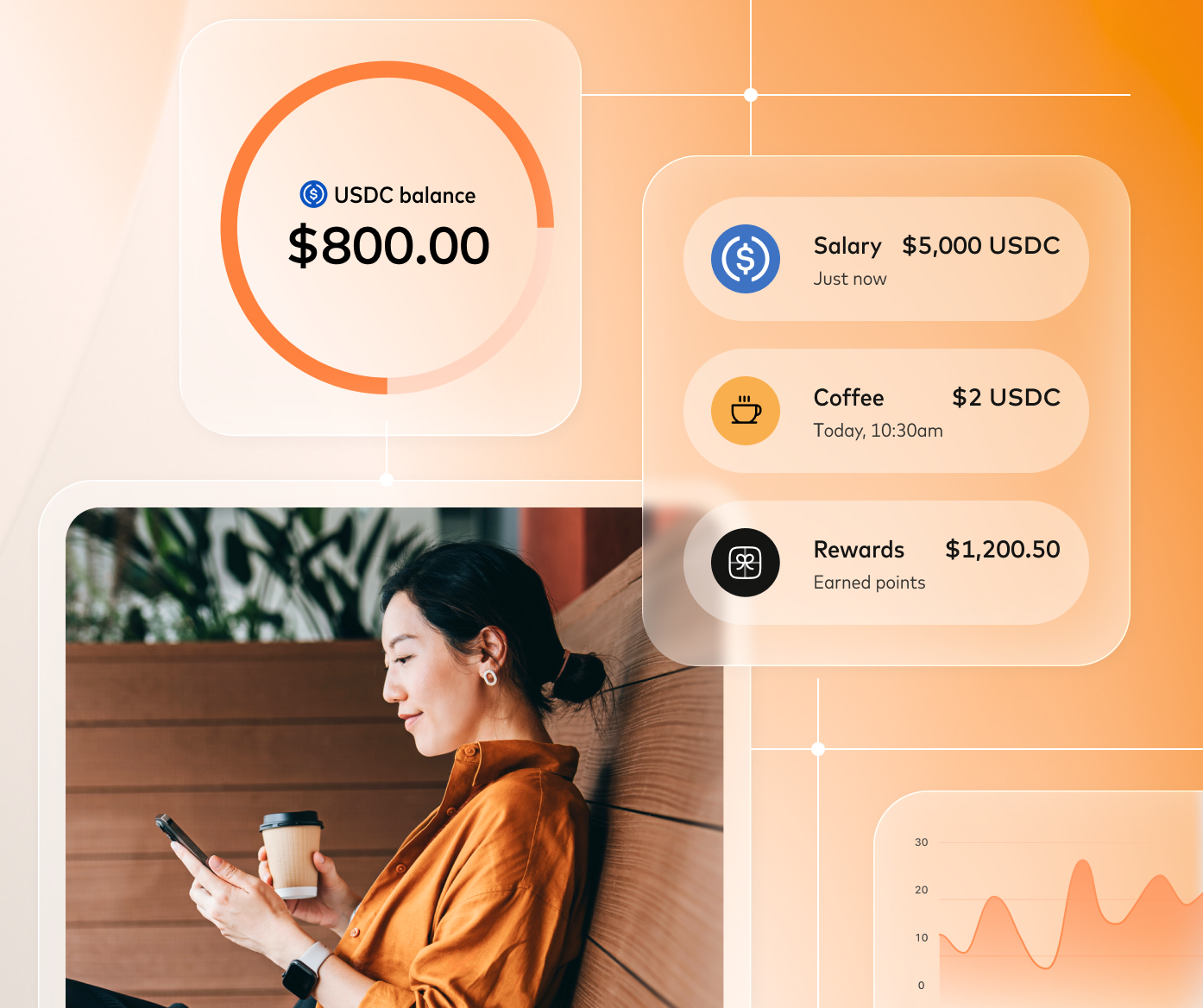
- Stablecoin-linked cards for spending digital balances in traditional channels
- Embedded wallets that your customers can access within your platform
- Rewards programs on stablecoin balances
- Virtual accounts with named IBANs in multiple currencies
- Stablecoin issuance
Direct vs. embedded deployment
Critical distinction: Can the provider offer these products directly to you for your own operations, and embedded for your customers to use within your platform? This flexibility determines whether you can build comprehensive financial services in your own platform, under your own brand.
What to verify
- Which products are included in the base platform versus available as add-ons?
- Does their product roadmap align with your use cases and customer ambitions?
- Can you deploy products both directly and embedded, or are you limited to one model?
- Do white-label capabilities require separate licensing or operate under the provider's licensing umbrella?
The difference between a payment rail and a financial services platform is breadth: providers with comprehensive product suites enable you to serve customers end-to-end rather than stitching together multiple vendors.
Enterprise payment performance standards: uptime, latency, SLAs
Enterprise payments depend on consistency. One failure during peak settlement can damage client trust, disrupt global payout cycles, and trigger regulatory reviews.
For enterprises and fintechs handling thousands of transactions per minute, reliability becomes a quantifiable performance standard that determines whether a provider can be trusted with production traffic
How to measure and verify platform reliability
Providers consistently claim high reliability, but enterprise clients need measurable proof:
- System uptime: Measured through audited service-level agreements. For mission-critical infrastructure, 99.99% availability is the minimum benchmark, and you should ask for the audit reports rather than accepting marketing promises.
- API latency: Fast response times ensure smooth payment experiences for end users, with sub-100-millisecond latency as the standard for well-optimized systems.
- Error rates and retries: Mature platforms track and publish metrics on failed transactions, automated retries, and recovery performance.
- Incident transparency: Structured incident reporting, clear escalation paths, and postmortems documenting remediation steps should be standard expectations.
Validating performance under enterprise transaction volumes
Scale exposes weaknesses that smaller providers rarely encounter – liquidity mismatches, rate-limit throttling, and reconciliation delays among them.
Ask potential partners for evidence of sustained throughput rather than peak volume, and look for providers serving multiple enterprise clients simultaneously without degradation, backed by metrics that prove it.
Settlement speed requirements
For businesses operating across currencies and stablecoins, settlement time affects both liquidity and customer satisfaction. The best-performing systems process fiat settlements in hours rather than days, and confirm blockchain transactions within minutes.
Liquidity management tools reduce friction through automated conversions and dynamic routing between banks and networks. Pay attention to how settlement data is surfaced – dashboards, notifications, and APIs that expose confirmation status are now standard expectations.
The architecture of fiat settlement matters as much as speed. Providers with direct access to payment schemes like SEPA, Faster Payments, or FedNow can settle transactions with fewer intermediaries and reduced counterparty risk. BVNK, for example, maintains direct SEPA connectivity, while many competitors rely on correspondent banking chains. Each additional banking partner introduces latency, reconciliation complexity, and potential failure points that can extend settlements from hours to days. When evaluating providers, map out their settlement architecture and prioritize platforms that minimize intermediary hops between stablecoin receipt and fiat delivery.
Security certifications and business continuity requirements
Enterprise-grade systems incorporate continuous monitoring, multi-region redundancy, and clear business continuity plans. Many are independently certified under frameworks like ISO 27001 or SOC 2 Type II.
Security assurance extends beyond technical infrastructure to operational processes: how keys are managed, how staff are vetted, and how quickly suspicious activity is escalated.
Pre-contract evaluation framework: 5 questions for provider selection
Selecting a payment partner at enterprise scale means testing assumptions before they become problems. This checklist will help you interrogate potential providers, using questions that reveal real enterprise readiness.
The best enterprise payment partners welcome these questions and back up their answers with data, certifications, and client references.
On the other hand, providers who struggle to answer clearly often lack the operational maturity you need.
Ask these questions during evaluation, while you still have leverage. Once you're integrated, switching costs make gaps expensive to fix.
1. Compliance and licensing
Start by checking whether they're licensed for both fiat and digital assets in the regions where you do business. Licensing breadth determines how far your payments can move before hitting a regulatory wall.
Ask:
- Which specific licenses cover your activities in each jurisdiction?
- Who performs transaction monitoring and reporting, your team or theirs?
- How do they implement AML and Travel Rule obligations in practice?
2. Proven scale and enterprise track record
Look for providers with demonstrated ability to handle significant volumes under real-world conditions.
Ask:
- What transaction volumes do you process annually?
- Which enterprise clients can provide references?
- How do you perform during settlement spikes and peak traffic?
- What's your documented uptime over the past 12 months?
- Do you have banking partner redundancy / work with reputable bank partners?
3. Delivery model flexibility
A managed service accelerates market entry by operating under the provider's license. An infrastructure-level model offers more control but requires internal compliance capability. You want to make sure your use cases and needs are covered by these options, along with enough flexibility to shift between the two as your organization grows.
Ask:
- Can we operate under the provider's license?
- Who controls the onboarding of our customers for embedded product use cases?
- Are we able to transition to our own licenses and self-managed model later if needed?
4. Product breadth and roadmap
Stablecoins enable 24/7 programmable financial services beyond basic payments. Strong providers offer comprehensive product suites – wallets, cards, rewards, payouts, conversion – that support both your direct operations and embedded deployment for your customers.
Ask:
- Which products are included in your base platform versus add-ons?
- Can we deploy products both directly for our operations and embedded for our customers?
- Does your product roadmap align with our use cases and customer ambitions?
5. Performance and security
Reliability and security should be measurable through uptime data, latency reports, and independent certifications. Enterprise references in similar markets give additional confidence that the provider can actually deliver at your scale.
Ask:
- Critical incident resolution times?
- Which audits or certifications verify your security posture?
- Multi-region redundancy and failover capabilities?
Defining enterprise-grade payment infrastructure in the stablecoin era
Enterprise-grade payments are no longer defined by uptime and global reach alone.
Instead, they're measured by how well a platform supports your business and customers' needs while managing compliance, scale, and speed simultaneously, without forcing you to choose between them.
As stablecoins reshape cross-border payments, the real differentiator is trust. Trust earned through comprehensive licensing, transparent operations, and operational control.
The strongest providers build compliance into their product architecture from the beginning, with automated workflows that scale across jurisdictions.
For payment leaders, the goal is straightforward: choose infrastructure that can handle today's complexity and tomorrow's regulation without slowing you down.
In the stablecoin era, enterprise-grade means confidence under pressure, and systems built to prove it.
If your organization is evaluating enterprise-grade payment infrastructure, our team can walk you through how BVNK's full-stack platform meets the criteria outlined in this guide. Talk to our payments experts
.jpg)

.jpg)

.avif)


.avif)






.avif)



.avif)





.avif)
.avif)




.avif)





.avif)

.avif)



.avif)


.avif)


.avif)


.avif)


.avif)
.avif)


.avif)


.avif)


.avif)




Never miss an insight.