Taking stablecoins to scale
.avif)
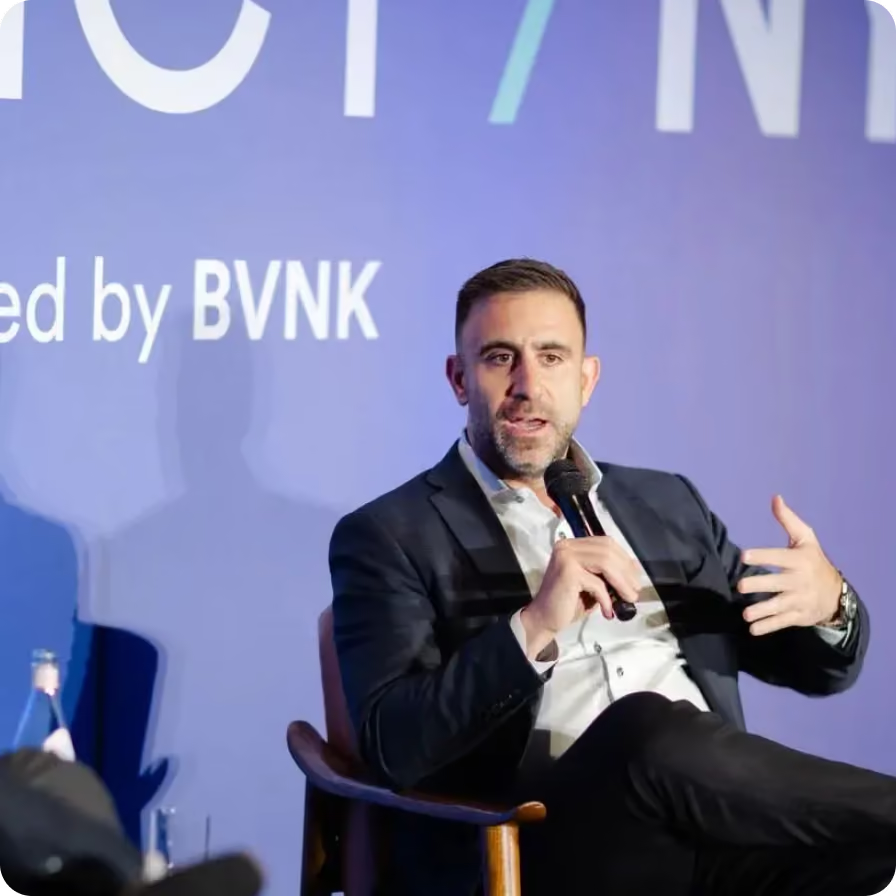
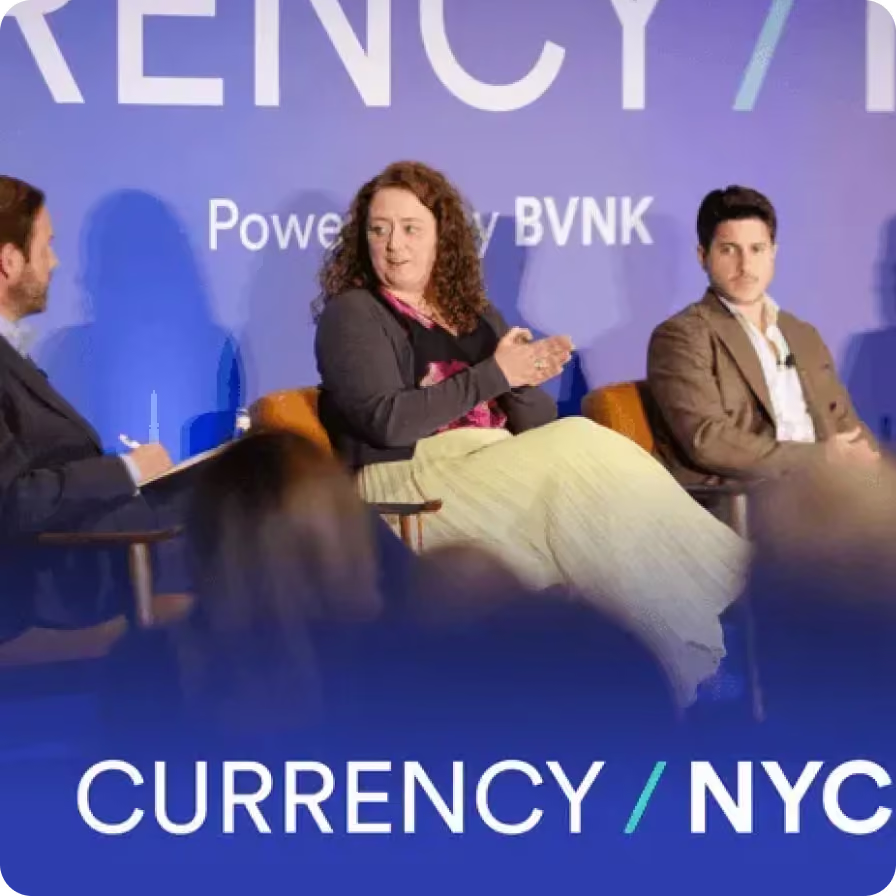
We sat down with Raj Dhamodharan, EVP of Blockchain and Digital Assets at Mastercard, and Chris Harmse, Co-Founder and CBO at BVNK, to discuss how stablecoins are becoming foundational infrastructure for global payments. Here's their conversation on interoperability, enterprise adoption, and what's next.
Why stablecoins, now?
Chris:
Mastercard's been moving value for the last 60 years. Why have stablecoins jumped onto the agenda now? Why has that become a component of your strategy?
Raj:
Mastercard started with cards, but we've always looked at this as a much broader proposition. From cards, we've supported account-to-account payments, open banking infrastructure. And in every step of the technology transition, we look at two things: what choice can we offer safely and securely to consumers and businesses, and whether it really adds value in terms of simplicity. When stablecoins came about, we saw an opportunity to add value to both.
Chris:
For us at BVNK, we viewed stablecoins from the beginning as another payment rail, interoperable with card rails and non-card rails like RTP. We were probably a bit too early sometimes, but we built for that future. We started with pay-ins and payouts because that's where merchant demand was.
But now it's evolved. It's no longer just a payment method. You can use stablecoin infrastructure to build entirely new financial experiences – embedding wallets into platforms, earning yield natively on those wallets, issuing stablecoin-linked cards to spend digital dollar balances anywhere in the world.
Raj:
That's the key. We're not looking at this as a replacement for existing rails. It's about choice and optionality.
Early opportunities to deliver value
Chris:
Looking at Mastercard's existing stack, what are the early opportunities to deliver customer value with stablecoins?
Raj:
We're starting with cross-border. Our Mastercard Move network already reaches 17 billion endpoints globally and handles multiple currencies, but it's largely fiat-based.
As stablecoins become more prevalent, especially in Asia and Latin America, customers increasingly prefer to receive stablecoins. That's why we started working with BVNK to extend the Move network to stablecoin destinations. It's a no-regret move: it extends reach, delivers increased utility, and gives people choice.
The second opportunity is closer to our card network. We have over 130 card programs around the world that are crypto or stablecoin-connected. Many of those operators do their day-to-day business in stablecoins. They'd love to settle with us in stablecoins. Crypto merchants want to get paid in stablecoins. So our treasury is now starting to accept and disperse stablecoins directly.
Chris:
And from the enterprise side, we're seeing real momentum too. Two or three years ago, it was all consultative – workshops, education, understanding use cases. Through 2025 and into this year, we've seen an explosion of enterprises going live with meaningful use cases.
We've got treasury management examples like dLocal managing billions in stablecoin-based treasury. We recently announced a partnership with Corpay, one of the largest cross-border money movement businesses, integrating stablecoins across wallets and B2B payments so their customers can move money on this new rail.
Which use cases hit scale first?
Chris:
At Mastercard, anything needs to be at scale. So what use cases do you think are going to hit scale first? B2B payments? Cross-border remittances? Something else?
Raj:
If you look at card payments, we process over 10 trillion dollars, but that doesn't come from one sector. It comes from multiple use cases: B2B, consumers, different segments using it for different purposes. This is no different.
Gig economy payouts are resonating really well right now, that's a top use case. Remittances will be another. But then businesses will start adopting because they want to pay and get paid faster. People always want choice. Some want to pay fiat, others want to receive stablecoins or vice versa. There's a multitude of stablecoins coming, so people want optionality too.
B2B payments will kick in as a fast follow. And then looking further ahead, we've got the agentic commerce economy emerging. Some of it will be powered by cards, some directly by stablecoins. Wallets on-chain bound with agents being able to spend safely and securely – that's a likely future.
We're investing in the right infrastructure to serve all those use cases safely for both consumers and businesses.
The road ahead: trillion-dollar vision
Raj:
How do you see the future evolving from here at BVNK?
Chris:
For us, we've always had this North Star: a trillion dollars of TPV (total payments volume). That's scale. You're doing multi-trillions across different rails under your network. For us, it's "How do we get a trillion dollars to move on this new payments infrastructure?" We're only 4% of the way there, but that's been guiding us from the beginning.
To get there, we need to move all use cases somewhat on-chain – card settlement flows, B2B payment flows. But where you get escape velocity is in agentic, machine-to-machine commerce. New agents in the economy will need different payment modalities.
It might be a virtual card. It might be a stablecoin wallet. Building the right infrastructure, the right compliance framework, linking those agents back to real-world businesses and consumers – that's how we move toward trillion dollars of TPV. Stablecoins become a rail alongside these other payment modalities.
Raj:
You call TPV, we call it GDV – gross dollar volume, but we're saying the same thing. The vision is clear: stablecoins as interoperable infrastructure that makes global payments more efficient.
“We started working with BVNK to expand the Mastercard Move network to stablecoin destinations. It’s a no-regret move: it extends reach, delivers increased utility, and gives people choice.”

.jpg)
.avif)


.avif)






.avif)


.avif)




.avif)
.avif)




.avif)





.avif)

.avif)



.avif)


.avif)


.avif)


.avif)


.avif)
.avif)


.avif)


.avif)


.avif)



Never miss an insight.
